
A Guide to Saba: The Caribbean’s Best-Kept Secret
By Kerry Biddle on 15th April, 2026
Tucked just 28 miles southwest of St. Maarten lies Saba — an emerald-green dot in the Caribbean Sea that quietly steals the hearts of those who find it. This gumdrop-shaped island, just five square miles in size, offers something few tropical destinations can: serenity, authenticity, and a sense of discovery that feels entirely your own.
 Saba, also known as the Jewel of the Caribbean | Photo credit: Cees Timmers
No mega-resorts, no cruise ship crowds, no casinos. Just soaring volcanic peaks draped in rainforest, storybook villages of white-washed cottages with red roofs, and some of the most spectacular diving in the entire Caribbean. Saba — known affectionately as the Unspoiled Queen — is a destination that rewards those who seek it out.
Getting to Saba from St. Maarten
By Air
The quickest and most popular way to reach Saba is by plane from St. Maarten’s Princess Juliana International Airport (SXM). Winair offers four scheduled daily flights, and the journey takes just 12 minutes — though those 12 minutes are among the most memorable of any Caribbean trip.
Saba’s Juancho E. Yrausquin Airport is officially the airport with the shortest commercial runway in the world, measuring just 400 metres, perched between sea cliffs with the Caribbean on both ends. Landing here is an experience in itself, and for aviation enthusiasts it’s a genuine bucket-list moment. Private charters are also available through SXM Airways and Windward Express for those who prefer a flexible schedule.
A Winair day-trip roundtrip ticket starts from around $129 (including taxes). Book in advance during high season, as flights fill quickly.
By Ferry
Two ferry services connect St. Maarten and Saba, with crossings taking approximately 90 minutes depending on sea conditions.
The Edge departs from Pelican Marina at the Simpson Bay Resort on Tuesdays and Fridays, with check-in at the Aqua Mania Adventures office from 8:00am (check-in closes at 8:35am). The ferry arrives in Saba at around 10:30am and departs for the return at 3:30pm, arriving back in St. Maarten around 5:00pm. The Edge is particularly popular with day-trippers, and add-on packages including a taxi island tour and lunch at Tropics Café are available to book alongside your ticket.
The Makana Ferry operates from Bobby’s Marina in Philipsburg on multiple days throughout the week (check the current schedule at sabaferry.com, as days are subject to change). The Makana is a 72-foot air-conditioned catamaran with two decks, a bar, and capacity for 150 passengers, and also serves St. Eustatius and St. Kitts.
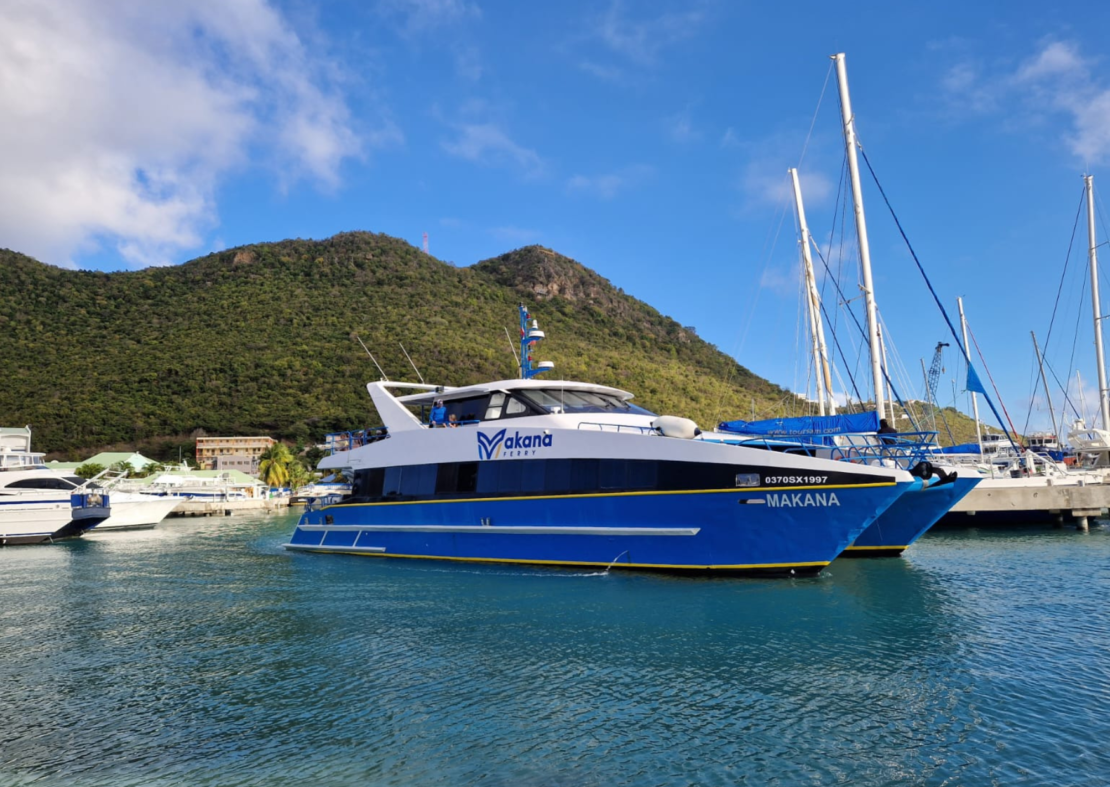
One important note for ferry travellers: the channel between St. Maarten and Saba can be rough, particularly in winter months and on windy days. If you are prone to motion sickness, bring medication and consider sitting on the outer deck, where the breeze helps. The approach to Saba by sea — watching the volcanic cone rise dramatically from the water — is unforgettable, but the journey can be bumpy. Book in advance during peak season, and build flexibility into your plans in case of weather cancellations.
One-way ferry ticket prices range from approximately $55–$75 USD.
A Note on Passports
A valid passport is required to visit Saba. Nationals of the US, Canada, and most European countries do not need a visa for stays of up to 90 days.
Things to Do in Saba
Hiking Mount Scenery and the Trail Network
Saba is a hiker’s paradise. The island has more than 17 marked trails that wind through lush cloud forest, along cliff edges, and up to the island’s volcanic peak. The centrepiece is Mount Scenery — at 887 metres (2,910 feet), it is the highest point in the entire Kingdom of the Netherlands, and the summit is reached via the famous 1,064-step trail through elfin forest draped in bromeliads and orchids. On a clear day, the views stretch across to St. Maarten, St. Barths, St. Eustatius, and beyond.
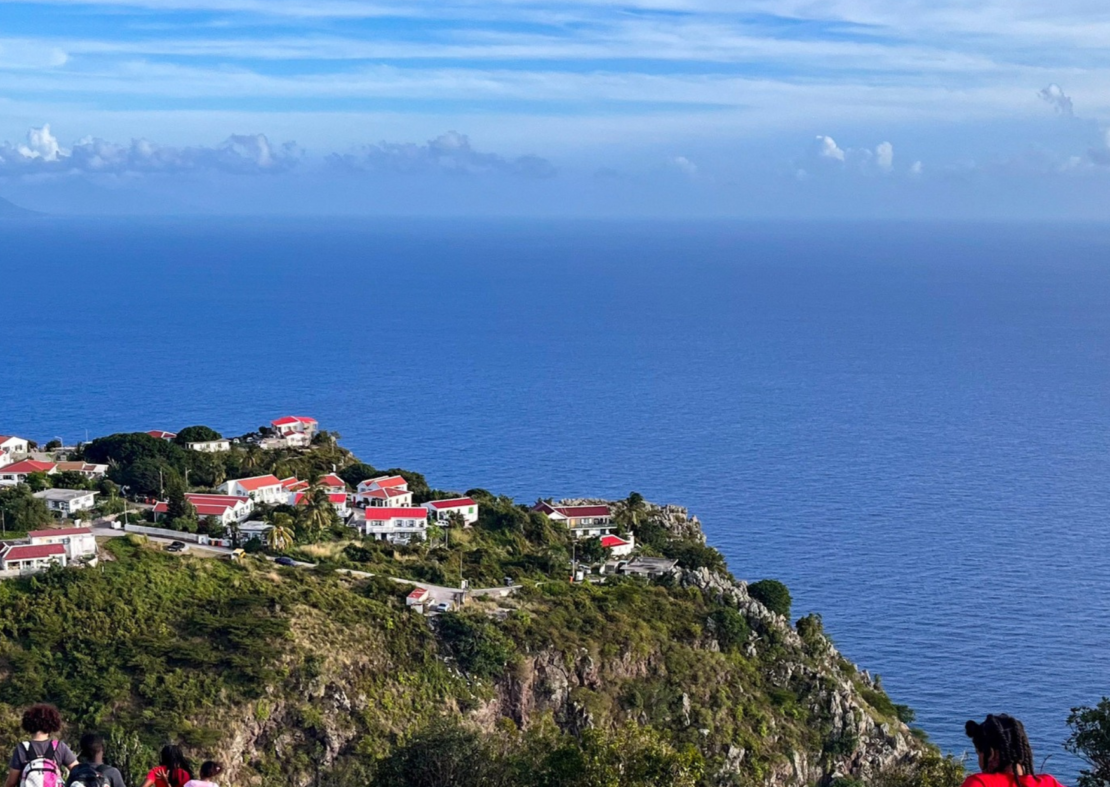
Other popular trails include the Crispeen Track through the agricultural zone, the Sandy Cruz Trail winding through old-growth forest, and the Ladder Trail — a historic cobblestone path once used to haul cargo up from the sea. The Saba Conservation Foundation manages the trail network and provides trail maps; the office is located in Windwardside.
Good walking shoes with grip are essential. Trails can be slippery after rain, which is frequent on the upper slopes.
Diving the Saba Marine Park
Saba’s underwater world is world-class, and the Saba Marine Park — which protects the entire coastline from the high-water mark to 60 metres depth — is one of the best-managed marine reserves in the Caribbean. The diving here is exceptional: towering sea mounts and volcanic pinnacles rise from deep water, covered in black coral, sea fans, and encrusting sponges, with strong currents that bring in pelagic life including sharks, rays, and turtles.
 The diving off the coast of Saba is spectacular | Photo credit: Trent Reid
Some of Saba’s most famous dive sites include:
Pinnacles — dramatic volcanic spires rising from 30 metres, teeming with blacktip sharks, spotted eagle rays, and schools of fish.
Third Encounter — one of the Caribbean’s signature pinnacle dives, offering breathtaking wall diving with rich marine life.
Tent Reef — a shallower site perfect for less experienced divers and snorkellers, with vibrant coral and abundant reef fish.
A unique feature of Saba’s marine environment is the presence of hydrothermal vents — fumaroles that release warm, nutrient-rich water, nourishing an extraordinary diversity of marine species.
The two main dive operators are Sea Saba (based in Windwardside, with a Fort Bay harbour operation) and Saba Divers, both of which are well-regarded and offer everything from discover scuba sessions for beginners to advanced multi-dive packages. All divers must carry a valid certification card.
Snorkelling
Not a diver? Several of Saba’s inshore sites are accessible to snorkellers, particularly around Tent Reef and Well’s Bay, where the marine park protection means coral and fish life is rich and well-preserved. Your dive operator can advise on conditions.
Exploring the Villages
Saba has four villages, each with its own character, connected by the island’s single winding road — the Road (literally named so, as engineers once declared it impossible to build).
Windwardside is the island’s main hub for visitors: a charming cluster of white cottages, the majority of the island’s restaurants, cafés, shops, and the Saba Museum. Most accommodation is based here.
The Bottom is the island’s capital, set in a volcanic bowl and home to the government buildings, the Windward Islands Bank ATM, the Sacred Heart Church, and a relaxed local atmosphere. It’s worth a wander.
Hell’s Gate is the first village you’ll encounter arriving from the airport, with sweeping views out to sea and the island’s oldest church.
St. John’s is the smallest and quietest of the four, with traditional architecture and a peaceful, off-the-beaten-path feel.
The Saba Botanical Garden
Located near Windwardside, the Botanical Garden is a beautiful, tranquil spot showcasing the island’s remarkable diversity of tropical plants, flowers, and trees. It’s an easy and rewarding stop between the village and the trailhead for Mount Scenery.
The Saba Museum
Also in Windwardside, the Harry L. Johnson Museum is housed in a beautifully restored 19th-century sea captain’s cottage and charts the history of Saba’s people, architecture, and way of life. Small but fascinating, and well worth an hour.
Saba Lace and Local Shopping
Saba has a proud tradition of intricate handmade lace-making — Saba Lace (also known as Spanish Work) — brought to the island in the late 19th century and still practised today. Pieces range from delicate table linens to wearable items and make distinctive, genuinely local souvenirs.
Also look out for Saba Spice — a locally made rum liqueur infused with herbs and spices — and hand-blown glass art produced on the island. Both are available in Windwardside.
Where to Stay in Saba
Saba’s accommodation options are deliberately small in scale — no large resorts, no all-inclusives. What you’ll find instead are intimate hotels, guesthouses, self-catering cottages, and private villas that fit the island’s character perfectly. Prices range from budget-friendly guesthouses to charming boutique hotels with Caribbean views. The majority of properties are in Windwardside, with some villas in the surrounding hills.
Check the Saba Tourism website for a full and up-to-date listing of accommodation options across all price ranges. Book early during the peak season (December to April), as capacity on the island is genuinely limited.
A practical note: evenings in Saba can be cooler than you’d expect — particularly at altitude — so pack at least one layer with long sleeves.
Electric outlets take US plugs at 110V.
Where to Eat in Saba
Saba punches well above its weight in the dining department. Windwardside has the greatest concentration of restaurants and cafés, ranging from casual spots serving local Caribbean food to more polished dining options.
Tropics Café is one of the island’s most popular lunch spots, with stunning valley views and a menu of fresh, well-priced food — a favourite stop on day-trip itineraries.
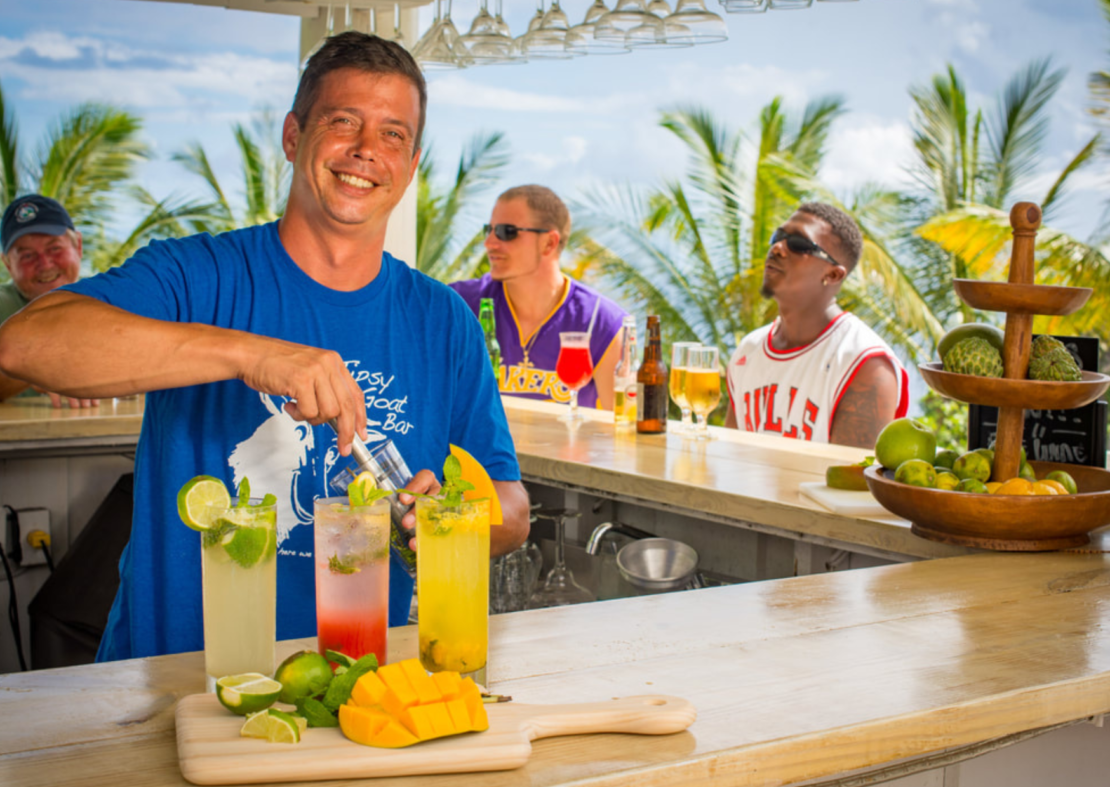
Brigadoon offers an elevated dining experience — candlelit, romantic, and ideal for a special evening meal in the hills above Windwardside.
For more casual eating, Fort Bay harbour has street food and snack bars, ideal if you’re arriving by ferry and need something before heading up the Road to the villages.
One practical tip: carry cash for smaller cafés and street food vendors, as not everywhere takes cards. Larger restaurants generally accept Visa and Mastercard.
Money, ATMs, and Currency in Saba
Saba’s official currency is the US Dollar, which is accepted everywhere on the island. Most established restaurants, hotels, and shops accept major credit cards (Visa, Mastercard). However, smaller vendors, street food stalls, and some cafés are cash only.
There are currently two ATMs on the island: one at the Royal Bank of Canada branch (RBC) in Windwardside, and one at the Windward Island Bank (WIB) in The Bottom, both open on weekdays. De Nederlandsche Bank has announced plans to expand the island’s ATM infrastructure further, so availability may improve. That said, it’s always wise to arrive with sufficient USD cash, particularly if you plan to hike, visit smaller establishments, or spend time away from Windwardside.
Important: there are no ATMs at the airport or the ferry port in Fort Bay. Make sure you have cash in hand before departing Saba.
Accommodation Tips and Practical Information
Getting around: There are no buses on Saba and no ride-hailing apps. The island has approximately a dozen taxis, so it is strongly advisable to pre-book your taxi in advance — particularly if arriving by ferry. The Saba Tourist Bureau can assist with taxi bookings and contacts. Do not assume a taxi will be waiting at the port or airport, especially during busy periods.
 Clouds color the sea at Well’s Bay | Photo credit: Kai Wulf
Weather: Saba enjoys a tropical climate, but being a volcanic island with significant altitude, the upper slopes and Mount Scenery area are frequently in cloud and can receive sudden heavy rain. Bring a lightweight waterproof layer if you plan to hike. The dry season runs from January to July; August to November is wetter and also hurricane season, though Saba’s mountainous terrain provides some natural protection.
Medical: Saba has a small hospital — the A.M. Edwards Medical Centre — in The Bottom, capable of handling general medical needs.
Phone and internet: Mobile coverage exists but is limited in some areas. Wi-Fi is available in most accommodation and larger restaurants.
Departure Tax
When leaving Saba, a departure tax of $10 USD cash is payable at both the airport and the ferry port. There are no ATMs at either location, so ensure you have cash set aside before heading to your departure point.
When departing St. Maarten, a separate departure tax of $20 USD applies; note that some operators include this in the ticket price, so check when booking.
Why Saba Stays With You
Perhaps the best souvenir from Saba is the deep connection visitors often develop with the island, its people, and the serene, unhurried flow of daily life. The Saban community — many descended from the island’s original 17th-century settlers — is genuinely warm and welcoming in a way that larger, more tourist-heavy islands rarely manage.
This is a place of extraordinary natural beauty: above the water in its cloud-capped peaks and flower-lined trails, and below in its protected marine world. It is small enough to explore fully in a few days, yet rich enough to fill far longer. Saba is the Caribbean as it used to be — and increasingly rare is that.
Explore More: